 By usasmooths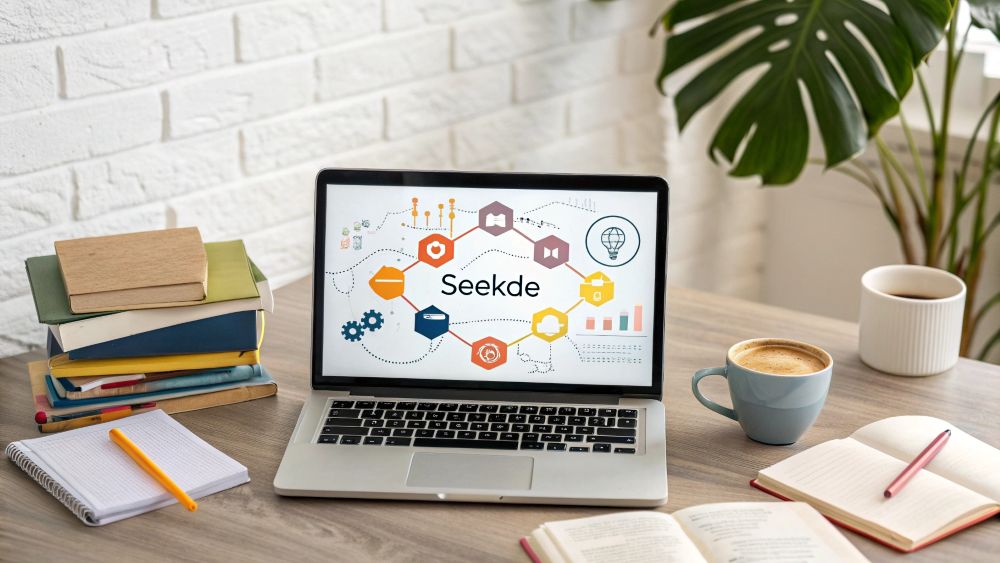
Seekde is an intelligent AI-powered discovery tool designed to help users find clearer, more structured, and meaningful information online. Instead of giving long lists of random search results, it focuses on context, trust, and deeper understanding.
This makes it especially useful for research, learning, and professional exploration. It stands out because it understands the intention behind your search rather than matching plain keywords.
It works by analyzing the intent behind your query, connecting related ideas, and presenting them in a structured way. It uses semantic understanding and concept mapping to show not only answers but also how topics relate.
This makes it powerful for deep learning, research, and topic exploration across different fields.
It aims to create meaningful knowledge discovery rather than quick, surface-level search results.
Its AI studies context, relationships, and patterns to deliver more relevant insights.

It includes several advanced tools that improve the search and discovery experience. These include contextual search, visual knowledge maps, trusted source identification, adaptive learning, and collaboration options.
Together, these features transform how users explore information, making research smoother, faster, and more accurate compared to traditional search engines.
Important Functions to Know
- Context-driven results
- Knowledge mapping
- Trusted sources
- Adaptive learning
- Collaboration tools
It is growing fast because online information is overwhelming, and users now prefer clarity over volume. With its organized insights, clean interface, and deeper analysis, It helps people understand topics faster.
Its ability to filter unnecessary information makes it attractive for students, professionals, and curious learners.
People appreciate its simplicity, structured results, and ability to save time during research.
Traditional search engines produce thousands of unfiltered results, leaving users to sort through clutter. Seekde, however, focuses on meaning, relevance, and structure.
It offers fewer but more accurate results, supported by knowledge maps and trustworthy sources. This makes it a stronger option for users who need clarity over quantity.
Traditional engines rely on keywords, while it interprets intent and meaning.
| Traditional | Seekde |
| Keyword-based | Intent-based |
| Too many results | Focused insights |
| General browsing | Research-heavy use |
It’s technology is built on semantic understanding, machine learning, and adaptive algorithms. It identifies patterns, connects related concepts, and highlights credible sources.
This system allows users to explore information at a deeper level. Whether studying a subject or researching a topic, its AI guides users to more meaningful insights.
How the Technology Behind Seekde Works
It continually learns from user activity to deliver better, sharper results.
It is especially helpful for academic users because it organizes complex topics, provides trustworthy information, and simplifies research. Students can quickly understand subjects, gather relevant points, and explore concepts visually.
Researchers benefit from cleaner results, structured mapping, and reliable references, making academic work more efficient.
Why Students Love It
It simplifies learning, reduces research time, and provides reliable academic sources.
Professionals across various industries use It to explore trends, collect insights, and prepare reports. Its clear layout and deep knowledge mapping help them make informed decisions faster.
The platform also supports team collaboration, making it ideal for workplaces where shared research and collective understanding are essential for productivity.
Workplace Use Cases
Useful for trend analysis, strategic planning, and team-based research work.
It competes with major AI search tools, but it differentiates itself through trust, structure, and concept mapping. While competitors focus on fast answers, It emphasizes deep understanding.
This gives it an advantage among users who value meaningful discovery rather than surface-level results from typical search engines.
Who Competes with Seekde?
Perplexity AI, You.com, and traditional engines are its main competitors.
It prioritizes transparency and credibility, giving users access to trustworthy and verifiable information. It highlights clear sources, ensures ethical discovery, and avoids misinformation.
These safety features make it reliable for students, businesses, and researchers who depend on accurate knowledge for study, planning, and decision-making.
Security & Trust Factors
Its emphasis on source transparency improves content reliability.
To maximize It’s value, users should explore its knowledge maps, analyze suggested connections, and review trusted sources. Using clear queries improves accuracy, while saving insights helps in long-term projects.
The collaborative tools also support group research, making it ideal for academic or professional teamwork.
Tips for Better Results
Use clearer queries, explore related topics, and save your insights.
It is an excellent choice for anyone seeking structured, intelligent, and meaningful information. With its focus on trust, clarity, and deep discovery, it stands out from traditional search tools.
Whether you’re a student, researcher, or professional, Seekde offers a powerful way to explore knowledge efficiently in 2025 and beyond.
It is an AI-powered knowledge discovery tool that finds structured and meaningful information online. It analyzes search intent, links related concepts, and presents results using interactive knowledge maps.
Unlike traditional search engines that rely on keywords, It uses intent-based search to deliver focused, relevant, and trustworthy information for research, learning, and professional use.
Students, researchers, and professionals benefit from It. It simplifies complex topics, highlights credible sources, and improves productivity with knowledge mapping and collaboration tools.
It offers:
- Context-driven search for accurate results
- Knowledge mapping to visualize topic connections
- Trusted source identification for reliability
Yes. It ensures accurate and verifiable information by highlighting trustworthy sources and avoiding misinformation, making it safe for students and professionals.
Yes. It allows teams to share insights, explore topics together, and organize findings efficiently using its collaboration features.
Use clear and specific queries, explore knowledge maps, review suggested connections, save insights for later, and use collaboration tools for group projects.
Yes. It uses semantic understanding and AI algorithms to perform deep learning searches, connecting concepts and providing structured, meaningful insights beyond simple keyword results.
Absolutely. By reducing irrelevant results and providing organized, trustworthy information, It helps users research faster, learn efficiently, and make informed decisions.
- The Ultimate Guide to ECMISS for Digital Businesses
- The History and Meaning Behind Denim Tears
- EO PIS: Modern Framework for Executive Performance
- Exploring the Future of Electricity and New Power Technologies